Staff Reports
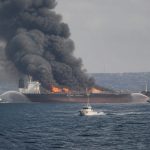
The waters around the Strait of Hormuz just got a lot hotter. A China‑linked tanker, the Marshall Islands‑flagged JV Innovation, was reportedly struck near the UAE coast. Flames and distress calls followed. That makes this the first known hit on a Chinese‑linked vessel since the Iran‑U.S. standoff spiraled upward. If anyone thought this was a regional skirmish you could ignore, think again.
What happened in the Strait of Hormuz
According to reports, the tanker was hit near Mina Saqr and sent out distress signals after a fire broke out on deck. Photos circulating online showed flames and markings indicating “CHINA OWNER & CREW.” Iran has tightened control of the strait and even set up a new body to tax and police shipping. Hundreds of commercial ships remain stalled, rerouted, or hiding out while the risk of drones, missiles, and mines keeps insurers red‑lining the maps.
Why this attack matters for shipping and oil
This is not just a shipping problem. Around one in five barrels of oil moves through the Strait of Hormuz. When tankers get attacked, oil prices jump and the cost of everything that depends on fuel follows. Insurers label those waters high‑risk and shipping firms scramble for alternate routes. Short of a full naval fix, global markets pay the price and ordinary people feel it at the pump and on grocery bills.
Project Freedom, deterrence, and who pays for protection
President Trump announced a naval escort plan called Project Freedom to keep commerce moving. Parts of that operation were reportedly paused amid diplomacy and disagreements with partners. Fine — diplomacy matters — but escorts do too. If Washington pulls back or dithers because of political theater, Iran will see weakness and push harder. And what about China? If Beijing wants its ships to sail unmolested, it can either stand up and protect them or admit it expects others to do the heavy lifting while it watches from the sidelines.
The bottom line is simple: the Strait of Hormuz cannot become a toll road for bad actors. The attack on the JV Innovation is a warning shot to the world’s trade lanes and to any leader who thinks appeasement will keep their economy safe. If the U.S. and its partners want real peace and predictable markets, they need clear rules, credible force, and the will to enforce both. Otherwise, expect more headlines, higher prices, and a new normal where commercial shipping negotiates with armed patrols and state‑sanctioned extortion.