Staff Reports
In today’s turbulent world, it seems like the U.S. has returned to playing whack-a-mole with its overseas adversaries, and this time the focus is on Iran. The good old “hammer them before they hammer us” approach is back in action, with American forces conducting strikes deep inside Iranian territory. Just recently, the destruction of the B1 bridge near Thrron was reported, showcasing the prowess of U.S. military operations and, dare we say, their flair for dramatic presentations. This bridge was crucial for the Iranian regime to transport military hardware, and its destruction serves as a clear signal: the U.S. isn’t kidding around.
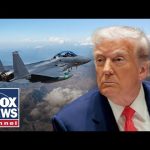
President Trump, always keen to take to social media, hinted that this was just the beginning. Next up on the hit list might be more infrastructure targets, followed by essential services like power plants. Clearly, it’s an address that neither avoids confrontation nor veils intentions. The focus on Iran is precise, perhaps to the dismay of its leadership, who are now scrambling like ants beneath a magnifying glass. The General Jack Keane spoke with conviction about the effective depletion of Iran’s capabilities, forecasting the accomplishment of strategic objectives shared with arch-ally Israel.
The battle scenario isn’t restricted to airstrikes alone. The iconic Strait of Hormuz, a vital artery for the global oil trade, is seeing reduced traffic due to clashes. The strait, famously playing peekaboo with oil tankers, underscores the fragile balance of economic interests and military maneuvers. Since late February, tankers brave enough to cross are notably fewer, making it quite the reminder of how interconnected and fragile economic circulations are.
Simultaneously, internal American military politics continue to add a whole different flavor to the unfolding drama. Secretary Hegsth’s sudden decision to relieve General Randy George of his duties has raised more eyebrows than a caffeine-fueled alarmist. With such rapid reshuffles, folks might wonder if our military strategy is suffering from a dose of reality TV drama. The narrative of rivalries, back channels, and abrupt promotions seems to have all the makings of a binge-worthy series. But underneath, let us not be distracted from the fact that while military chairs shuffle, regional security challenges remain unwavering.
Globally, the usual suspects, like the UK and France, find themselves lagging. They may have hesitated at the onset but now face questions of involvement in this American-led show. Their dithering should perhaps give them pause as they witness America’s militaristic assertion in a manner that reflects the heavy-handed style of a blockbuster film rather than the dainty art-house political negotiations they might prefer. The message is consistent—closed straits, cluster munitions, and missile stockpiles are not memoir stories you ignore.
This layered cake of military maneuvers, political shakeups, and hesitant allies casts a wide net. Whether it’s the debate over international allegiance, the spotlight on strategic alliances, or the scrutiny within American military ranks, one thing’s certain: the roller coaster ride in the Middle East has taken another exhilarating dip. Watch out, world—there might just be more to come before this all settles down.