Staff Reports
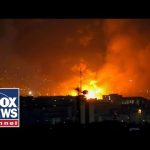
In the midst of ongoing tensions that could rival the plot of a gripping action movie, conflict erupted yet again in the Middle East. Iranian missiles soared through the skies above Tel Aviv, only to be skillfully intercepted, leaving behind a skyline punctuated by black smoke. It seems Iran launched another wave of attacks, not even bothering to wait more than six hours since their last unsuccessful effort. Meanwhile, Israel’s Prime Minister Benjamin Netanyahu dug in his heels, promising more stringent airstrikes on Iran, particularly targeting their prized oil facilities. Judging by the smoke rising from Tehran, Israel is certainly delivering on that promise.
One can almost picture the scene: fires blazing and smoke clouds forming an ominous backdrop to the residents of Tehran, who stopped to witness the unfolding drama. Not that Iran’s President Masoud Peskian is showing any signs of surrender. With rhetoric fit for a superhero villains’ monologue, he proclaimed that Iran would not bow to so-called oppression or aggression. Apparently, words are Iran’s weapon of choice after failing to inflict any substantive damage on Israel during their repeated attempts.
In this high-stakes game of tit-for-tat, Israel is not acting alone. The United States stands shoulder to shoulder with its ally, boasting nearly complete control of the skies over Iran. The American and Israeli partnership aims not only to reduce the Iranian military capacity but also to keep a lid on Iran’s playful habit of launching attacks against US allies in the Gulf. President Trump has been adamantly clear with his ‘no deal’ stance—unless one considers complete surrender a deal. The US government, like some stern teacher overseeing a schoolyard brawl, refuses to negotiate while Iranian missiles are still in play.
To make matters more complex, Iran’s antics aren’t restricted to just playing with rockets. They’ve cultivated quite the network of alliances with regional proxies, including Hezbollah in Lebanon and the Houthis in Yemen. By setting sights on these groups, Israel and the US are trying to trim Iran’s metaphorical branches. But the roots—their ballistic missile program and nuclear ambitions—continue to threaten stability. For a country moonlighting as a nuclear hobbyist with enough enriched uranium to cause international panic, Iranian bluster might just be the least of our worries.
Energy, the vital lifeblood of modern economies, sits precariously in the crosshairs of this escalating conflict. Iran holds some serious sway with its vast oil infrastructure and its ability to wreak havoc on the global market. However, the Trump administration is determined to counteract that threat, focusing on American consumers’ well-being and minimizing potential impact on gas prices. It’s a delicate balancing act, maneuvering through geopolitical turmoil and market sensitivities. With midterm elections looming, it appears the Republicans are banking on national security and energy independence to bolster their position—a strategy seasoned with a dose of political intrigue. Ah, the wonderful world of international politics, where every action has a potential plot twist waiting in the wings.