Staff Reports
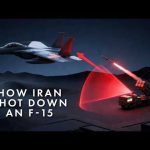
As tensions boil over at the Prince Sultan Air Base in Saudi Arabia, Operation Epic Fury edges closer to a fittingly epic conclusion. This time, the culprit behind the calamity is none other than Iran, continuing its unwelcome performance on the world stage with a missile and drone attack that left at least 12 American service members injured, two of whom are fighting for their lives. It’s not the first time Iran has tried – quite unsuccessfully – to upstage the U.S. and its allies in the region. But mind you, for every missile launch and drone alike, there are about a thousand job openings as anti-air defense systems find plenty of work.
Meanwhile, in Tel Aviv, whispers are heard from U.S. Secretary of State Marco Rubio to his G7 counterparts that this war, much anticipated by anyone ordering missile confetti in quantity, might stretch on for another two to four weeks. Clearly, President Trump’s more optimistic timeline met reality, or perhaps hesitancy to admit how wrong estimations can go when geopolitical fun is involved. Nevertheless, talks are afoot between the U.S. and Iran, proving once again that sometimes you do have to sit down with the unruly kid on the block. Although they’d rather use interpreters, or as they say – mediators – lest they have a translator go rogue.
And if anyone thought the region could do without another loud participant, enter stage left: the Houthis. They’ve fired a missile from Yemen intending to give Israel’s nuclear research center a love tap. Among the havoc are Israeli defenses scrambling for intercepts and air raid sirens rivaling doom-metal performances. Unfazed, Israel stood firm, exemplifying resilience against yet another attempt at partying by proxy. When missiles by Iran previously fell into residential areas, nearly 200 people were injured—proof that not every attempt at target practice lands quite right.
Amidst this backdrop, the classic tale of economic turmoil emerges, with oil prices soaring warmer than a midsummer’s day in Texas. But President Trump assures the public that, once the last firework pops and the war concludes, the American economy will shoot off like a rocket ship. And if one were to judge past performance, his previous tenure did see quite the financial feast—a fiesta that Trump predicts will only be surpassed by the current espresso shot economy post-conflict. Why America hasn’t fully turned on the money faucet yet remains part of a dramatic twist worthy of a Michael Bay film.
Politics, as always, enjoys playing musical chairs with the markets. While the administration longs for a quick conflict conclusion that’s as appealing as a warm pie, uncertainty continues to irk investors. Mixed signals, troop deployments, and Israeli eagerness to hit “play” on their action sequence only add seasoning to an already spirited stew. The markets, allergic to ambiguity, react as though they’ve spotted an open umbrella indoors. Fortunately, optimists see a bright horizon once the logistical snafu in the Strait of Hormuz is sorted out, timely washing the world’s energy woes down the proverbial drain.
In this theater of policy and power plays, international and domestic forces teeter between cooperation and competition. The stakes? Merely global peace and economic stability. As the world’s eyes remain fixated on the Gulf, one can only hope that cooler heads prevail and thoughtful diplomacy leads to a curtain call everyone can applaud from the comfort of their proverbial skybox seats.