Staff Reports
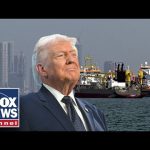
In the ever-thrilling saga of global politics, Iran seems to have taken center stage in what could only be described as the “World’s Most Dangerous Game of Chicken.” As tension simmers and boils over in the Middle East, the world watches with bated breath as President Trump raises the stakes, issuing an ultimatum to Iran: open the Strait of Hormuz or prepare for a not-so-friendly guest appearance by U.S. forces on their power grids. Talk about a high-stakes poker game.
The sleepy southern city of Arad woke up rudely to the realities of this geopolitical chess match, with over 100 Israelis nursing injuries from a single Iranian ballistic missile attack. As Prime Minister Benjamin Netanyahu toured the destruction, the crisis loomed larger with every impact crater, each a stark reminder that this is no mere war of words. Iranian ballistic missiles don’t stop to ask for directions, even less so when targeting civilian infrastructure, and the message is clear: Iran is flexing its muscles in a big way.
While President Trump isn’t exactly known for his subtlety, his swift call to action isn’t just a shout into the void. His strategic ultimatum to Iran about the Strait of Hormuz is a masterpiece of diplomacy in his usual style – loud, clear, and impossible to ignore. Unfazed by the political games, Trump and Netanyahu seem to echo the sentiment of teaming up against a common adversary while underscoring the necessity of a decisive response to Iran’s missile antics. It’s a very “my way or the highway” stance, and Iran’s mullahs would do well to heed the warning, unless they’re looking forward to an energy crisis of colossal proportions.
The knowledge that Iran could potentially target European cities like Berlin and Paris with their missiles is enough to make anyone with a European postal code a tad nervous. The grim reality is that defenses across Europe may not hold up against Iran’s precision-guided missiles, raising serious questions about their readiness. While Israel takes pride in its tried-and-true Iron Dome, Europe might want to consider investing in a few sturdy umbrellas of its own. Iran’s unpredictable strategy seems to be targeting not just military assets but also civilian infrastructure, reminding everyone that when chaos rains, it pours.
The sheer audacity of Iran’s tactics presents both a challenge and an opportunity for Gulf States. Their vulnerabilities are laid bare as this conflict exposes weaknesses in their defense systems. Yet amid the chaos, there’s a silver lining: unlikely alliances form, and under Trump’s encouragement, these nations might find common ground. A new coalition could emerge, united in purpose against an unpredictable Iranian regime willing to gamble with global stability. So while Iran might think they’re playing chess, they might soon find out the rest of the world is playing checkmate.