Staff Reports
In a world that’s supposedly enlightened and free, who would imagine the need for law enforcement to step in to protect people at a place of worship? Yet, this was the unfortunate reality in St. Paul, Minnesota, where a group of individuals, led by a familiar media personality, stormed a local church, causing chaos and fear among its congregation. This bold move, to turn a house of God into a theater of disruption, has been met with swift justice by none other than the Department of Justice. Nine individuals, now facing charges, learned the hard way that not even their crisply ironed privilege cloaks them from the hand of the law.
This orchestrated disturbance, on what church-goers assumed was just another icy Sunday morning, turned a humble gathering into a scene of panic and concern. The congregation, made up of families and elderly folks, did not expect their sanctuary to be the backdrop for this show of dissent. The planned “resistance operation” was anything but subtle. With cars streaming into the parking lot more like a convoy than peaceful attendees, they infiltrated the service with as much subtlety as a marching band in a library.
Of course, the list of antics didn’t stop at mere disruption. The scene played out with screams accusing the church of being a house of anything but holy worship. One guest of this ‘tea party’ proclaimed it the house of the devil, leaving little room for doubt that they weren’t there for the Sunday sermon. What about the right to protest, some might ask? The line is firmly drawn when freedom of speech morphs into a forceful, fear-inducing intrusion in spaces meant for safe worship. The First Amendment certainly doesn’t stretch wide enough to blanket such behavior.
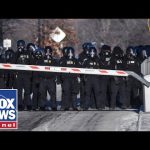
And yet, it seems the message from this bold move has sparked more backlash than empathy. As law enforcement swept in to restore order, reminders came aplenty: the right to free worship in America still stands, without the backdrop of fear and coercion. The Department of Justice, backed by the Trump administration, pursued justice with a reassuring steadiness, emphasizing that this kind of behavior—no matter how brazen or well-publicized—won’t go unchecked. It delivers a clear message: if you disrupt the peace of religious spaces, the full extent of the law will greet you without ceremony.
In the meanwhile, the brave individuals of federal law enforcement, often demonized by segments bent on misunderstanding or misrepresenting their purpose, continue to do their duty. The victorious ruling against those attempting to halt ICE operations in Minnesota stands as testament to their unwavering vigil. President Trump’s administration seems resolved to ensure that both citizens and their sanctuaries remain safeguarded. The theater of the absurd may play out from time to time, but there’s a comforting consistency in knowing the law has boundaries that will not bow to hubris or spectacle.