Staff Reports
Minneapolis finds itself once again at the epicenter of the nation’s ongoing debate over immigration enforcement and federal authority, with the latest incident turning the spotlight back on border security issues. This time, the commotion is the result of a shooting involving a Border Patrol agent. Around 10:15 Eastern Time, a person described as armed was shot by Border Patrol, not ICE, which sparks the question: Why was Border Patrol involved in the middle of Minnesota? Was this an operation targeting a specific individual or was it part of the broader immigration enforcement efforts that seem to ruffle local feathers?
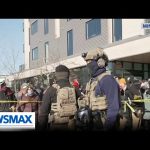
The Department of Homeland Security clarified that the person shot possessed a gun loaded with two magazines, making it difficult for critics to argue he was unarmed. Videos circulating online show the moments leading up to the shooting, though what isn’t clear right now is whether the incident involved a known suspect or an agitated protester stirring the pot. The situation quickly turned into a chaotic scene, with CPR being performed on the individual, but their condition remains uncertain, creating a ripe ground for conjecturers and political chess players to step in.
Ever quick to the Twitter battlefield, local politicians issued statements faster than a teenage gamer spams the “fire” button, with Minnesota Governor Tim Walz calling the event “sickening.” It seems, amidst these distressing situations, local leaders never miss a beat to spar with federal authorities, accusing them of contributing to what they view as unnecessary violence. It’s almost as if they forget about the armed suspect part—small details sometimes overlooked when one is trying to score political points.
There’s buzz about recent conversations between top brass like VP J.D. Vance and Minnesota AG Keith Ellison discussing immigration enforcement. Despite the reported communication, tensions clearly simmer as they play this high-stakes game of federal versus state rhetoric. You’d think at some point they’d realize that without more collaboration, there might be more incidents, affecting not just those involved, but stirring the ever-ready pot of public protests.
In the wake of this third such federal shooting in recent weeks in Minneapolis, DHS argues that if local law enforcement would cooperate more, there wouldn’t be as much need for federal agents to intervene. Meanwhile, some local narratives report the individual was unarmed, a story seemingly contradicted by photographic evidence of the weapon now in federal hands. Until clear-cut answers emerge, it’s safe to say Minneapolis won’t find a cool-down moment anytime soon. Minnesota might have ten-thousand lakes, but increasingly, it seems, only two narratives: state versus federal.