Staff Reports
In recent times, navigating international relations, particularly with countries like Iran and Cuba, has become a delicate ballet of diplomacy and resolve. The Trump administration, known for its unyielding stance on safeguarding national interests, has certainly not wavered when handling these challenging regimes. Most notably, Iran, the despotic theocracy that has been thumbing its nose at international norms, has found itself once more in the crosshairs of U.S. policy. Yet, as many watch closely, it’s not just the rhetoric but the tangible actions that speak volumes.
When President Trump laid down a deadline for nuclear negotiations, Iran’s lack of compliance certainly seemed to confirm suspicions of their disregard for international obligations. While some might argue that Iran’s ignorance stems from an unbending pride—or perhaps from their seemingly perpetual state of denial about global expectations—there’s little doubt about the superpower-ready fleet heading in their direction. After all, negotiating with a cabal that might sooner usher tourists into the fiery pits of a despotic underworld than submit to global standards requires a bit of added incentive, if you catch the drift.
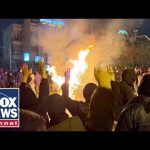
Meanwhile, the situation on the ground in Iran has seen brave citizens taking to the streets, demanding freedom from a regime that has more in common with medieval rulers than modern governments. The toll on protester lives has been sobering, pushing many to question what role the United States could play in bolstering their courage. The State Department has been quick to remind the world of the “maximum pressure” policy re-invoked by President Trump—a strategy designed to curb Iran’s notorious funding for ballistic missiles, nuclear pursuits, and regional terrorism. If one thing is clear, it is this: Maximum means maximum, and pressure means no room to breathe if you’re funding injustice.
On the other side of the geopolitical map lies Cuba—an island stuck in a time warp of Marxist mismanagement. Thanks to its longstanding relationship with Venezuela, the Cuban regime managed to squeak by, a toothless tiger with a Cuban cigar. But change comes swiftly when reality bites, and now, with Venezuela under a national makeover, Cuba finds itself without the resources it once leaned on. The U.S. administration maintains a firm stance: No more free passes for regimes basking in their own manufactured crises. The clear message? Mend your ways, or enjoy the consequences of your stubborn incompetence.
Finally, there’s the question of messages directed towards these regimes. If the powers in Iran, for instance, are attempting to tune in to Sunday Night in America—though one imagines they have their hands full with other quirks of theocracy—the missive from President Trump remains succinct: Drop the nuclear ambitions, cease the protests’ bloodshed, and perhaps then, the door to negotiation might unlock. But should they choose to persist in old habits, they might find themselves caught in the whirlwind of their own making—with the occasional reminder from the U.S. about what it means to truly have your back against the wall.