Staff Reports
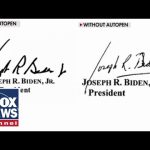
President Donald Trump has ignited fresh political fireworks on Truth Social, blasting the Biden administration’s heavy reliance on an autopen for signing executive orders and pardons. Trump insists that any documents autopen-signed without Joe Biden’s personal involvement are null and void, a direct shot at what he calls an illegal bypass of presidential accountability. His sharp rhetoric leaves no room for doubt about his disdain for his predecessor, rallying supporters who see this as a righteous call to expose White House irregularities.
At the core of Trump’s outrage is the claim that the autopen’s overuse undermined the direct responsibility expected of a commander-in-chief. House Oversight Committee Chairman James Comer’s probe reveals stunning stats: 88% of Biden’s documents—846 out of 958—bore autopen signatures. This overwhelming dependence prompts serious questions about true leadership in the Oval Office, where major decisions seemingly proceeded without the president’s hands-on approval.
Comer’s findings add fuel to the fire, showing 82% of these autopen uses happened while Biden was in Washington, D.C., yet many occurred when he was absent entirely. It’s a picture of detached governance, more akin to staffers calling the shots than a president steering the ship. Policy of this magnitude demands personal oversight, not mechanical proxies that erode public confidence in who was really running the country.
Apologists might defend the autopen as a modern necessity for the presidency’s workload, but such rampant application screams evasion of duty and authenticity. Trust in government crumbles when nearly nine in ten key actions skip the leader’s direct touch, raising alarms about unauthorized mandates pushed through under Biden’s name. Shortcuts have no place when they risk handing unchecked power to unelected aides.
As investigations press on, the autopen saga underscores Trump’s no-nonsense approach to cleaning up past abuses. Whether it sparks legal challenges or deeper probes remains to be seen, but it spotlights the need for ironclad accountability. This isn’t mere theater—it’s a battle for transparent leadership that puts America first, ensuring no future administration treats the presidency like a rubber-stamp factory.