Staff Reports
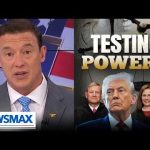
The US Supreme Court has delivered a stinging rebuke to President Trump, ruling that he does not have the authority to impose tariffs under emergency powers. In a 6-3 decision, the justices have, essentially, told the president that he must play by the rules and respect the boundaries of his office. The majority opinion, written by Chief Justice John Roberts, made it clear that the president cannot unilaterally impose tariffs without express congressional authorization. This decision is a significant setback for the president, who has been vocal about his disappointment in the court and the justices who ruled against him.
President Trump did not waste any time expressing his frustration, calling the justices who opposed him a disgrace to the nation and labeling them as fools and lapdogs for RINOs. Of course, his colorful choice of words is nothing new; the president has never been one to hold back when things do not go his way. However, while his rhetoric is as fiery as ever, it seems that he is undeterred by the ruling and is already working on alternative solutions.
Among those who sided with the majority were two of Trump’s own Supreme Court nominees, adding a pinch of irony to the situation. Justice Gorsuch emphasized that decisions of such magnitude should be left to Congress, describing the legislative process as a bulwark of liberty. Meanwhile, Justice Kavanaugh was more concerned with practicalities, pointing out the lack of clarity on how the government should handle the billions collected from importers.
The ruling has left many business owners, who initially opposed the tariffs, eager to seek refunds. The victorious group representing several small businesses announced plans to set up a centralized database to help navigate the refund process through the Court of International Trade and US Customs. It’s a mess, as Kavanaugh suggested, but someone has to sort it out while the president plots his next move.
Looking ahead, the Supreme Court will soon tackle other key issues concerning the president’s executive power, including the extent of his ability to fire members of the Federal Reserve Board and the contentious case on birthright citizenship. Meanwhile, President Trump is scheduled to be in China when the latter is argued, far from the courtroom drama that is sure to ensue. As the administration and the nation await these decisions, one thing is certain: the battle over presidential power is far from over.