Staff Reports
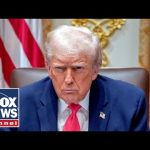
In an unusual but thoroughly captivating move, President Trump made his way to the Supreme Court to witness oral arguments regarding his attempt to end birthright citizenship. It seems Trump was not content to let the lawyers have all the fun; he decided to roll up his sleeves and grab a front-row seat. While some presidents might avoid such high-profile legal happenings unless they’re featured on the latest courtroom drama, Trump seems to relish the role of the proverbial elephant in the room. This is quite a historic occasion as no other president, to our collective astonishment, has physically attended a Supreme Court case birthed by their own executive order.
For months, the legal community—and indeed, the entire nation—has anticipated the showdown over the interpretation of the 14th Amendment. This battle centers on the phrase “subject to the jurisdiction thereof,” which feels about as straightforward as picking the winning lottery numbers. However, the crux of the argument lies therein. Post-Civil War, the 14th Amendment was designed to ensure that freed slaves and their children would receive U.S. citizenship. The complication arises when trying to decipher if this same amendment applies to children born in the U.S. to those who are visiting temporarily or are here without legal permission.
The high-stakes debate is not merely academic; it has very real consequences for the legal landscape of the country. Bringing some much-needed clarity, a constitutional law attorney pointed out parallels with historical instances. Native Americans, though born on U.S. soil, were not considered citizens until later legislation because they were subject to tribal laws—considered foreign powers. Ah, history, that mysterious time machine that sometimes clarifies and other times makes matters murkier than a politician’s promise on election eve.
Interestingly, even among the Republicans, there’s been a fair share of trepidation. Not all conservatives are riding the rollercoaster of excitement, fully expecting the court to weave its originalist magic wand and completely rehash the current interpretation. Many expect the court to maintain the existing precedents on birthright citizenship. However, the fact that Trump’s executive order has finally brought this topic before the highest court is a victory in itself, giving the issue the attention lawmakers on both sides have largely ignored.
Meanwhile, not to be outdone by traditional citizenship debates, the Supreme Court also weighed in on a First Amendment issue in Colorado. A ruling emerged stating that Colorado cannot impose restrictions on conversion therapy that would infringe upon free speech rights, scoring an 8-1 decision. In a world where free speech is often tested, this decision serves as a stark reminder of its enduring importance, a triumph for individual liberties that affects not only the legal profession but all manner of professional conduct across the nation. It seems that the guardians of the First Amendment are alive and well and keeping their eyes keenly peeled to prevent any undue erosion of the freedoms we hold so dear.