Staff Reports
In a world teetering on the brink of chaos, some strategic plays by President Trump might just be turning out to be pure gold. Picture this: the U.S. Navy, rolling up its sleeves, is maintaining a firm blockade on Iranian ports. Because who needs easy access to global trade when you’re busy playing hardball with a country over nuclear weapons, right? The President seems to believe his stern approach is not just smoke and mirrors; it’s a plan that might be pushing Iran to the negotiation table faster than a new episode of a popular reality TV show.
The President recently pointed out that Iran is now a bit more eager to talk about matters that were, not too long ago, off the discussion table. Nuclear weapons, which are normally quite the conversation stoppers, are now up for negotiation. Apparently, Iran has had a change of heart, or maybe they just realized that operating under the constant gaze of the U.S. Navy is not exactly a picnic. Either way, President Trump is feeling confident, strutting around like a rooster in a hen house.
Moving over to the Middle East, where the news is a bit more layered. A ceasefire between Israel and Lebanon has been brokered with the help of the U.S. State Department. The optimism is palpable, yet tempered with reality. Lebanon, bless its heart, is facing challenges controlling Hezbollah. Iran’s meddling in Lebanese politics isn’t helping either. While Lebanon might want to reel Hezbollah in, their control over the group is akin to trying to wrestle with jelly. It’s slippery business, and everyone knows it.
Israel is far from thrilled about the ceasefire. They are just itching to continue taking down Hezbollah, who has been launching rockets faster than you can say “conflict.” Over 6,000 rockets have already been fired at Israel, and they’re understandably a bit impatient to see Hezbollah disarmed for good. Despite this, the ceasefire stands, albeit a bit shakily, with Israeli ground forces remaining in southern Lebanon. Let’s just say peace in the Middle East remains elusive as always, but hey, a ceasefire on paper has got to count for something, right?
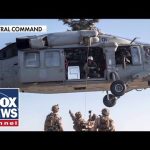
On the high seas, the blockade is proving to be a masterstroke. U.S. Navy ships have halted over a dozen ships, flexing some serious maritime muscle. This blockade is so effective, it’s practically giving Iran palpitations. Since their economy relies heavily on oil that flows through these blockaded straits, President Trump now holds the economic destiny of Iran in his hands. And he’s not exactly playing nice. It’s less about friendly banter at the negotiation table, more about Iran accepting US terms without much room for arguing. Economic collapse looms over Iran like a dark cloud unless they comply.
In the end, the situation is more a test of wills than a diplomatic tête-à-tête. With the U.S. holding an impressive deck of cards, the options for Iran seem limited. Ultimately, Iran will need to prove they’re serious about change before seeing any sanction relief. For now, they’re left with the prospect of accepting terms or facing the dire consequences laid out by President Trump and the U.S. Navy. One could say they’re caught between a blockade and a hard place—a diplomatic squeeze play that the administration hopes will yield results worthy of a headline or two.