Staff Reports
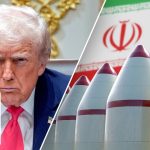
President Trump has formally told congressional leaders that the hostilities the United States initiated against Iran have “terminated,” a move that puts an exclamation point on a hard-fought period of American resolve. The White House sent letters saying there has been no exchange of fire since the ceasefire began in early April, and the president framed this as a clear end to the active campaign.
What the administration did was simple, decisive, and legally defensible in the way any serious commander-in-chief must act: it ordered a ceasefire on April 7 and the fighting stopped, giving the president authority to tell Congress the immediate hostilities are over. That factual cutoff—no exchange of fire since April 7—matters; it removes the pretext for endless congressional grandstanding and forces critics to either accept reality or admit they prefer chaos over order.
Congressional resistance predictably followed, but Washington’s usual obstructionism failed to derail the outcome. The Senate repeatedly blocked partisan war-powers measures designed to hobble the executive, and that institutional failure simply echoed the country’s longing for results rather than endless hearings and headline-chasing. The legislative theater could not substitute for policy or protect the American people better than forceful, timely action.
The administration’s legal interpretation—that a sustained ceasefire pauses the 60-day War Powers clock—may rile pundits, but it reflects the practical reality that war ends when the shooting stops, not when bureaucrats sign another resolution. If Washington insists on applying old rules to new forms of conflict, it must do so without jeopardizing commanders on the ground or giving adversaries a roadmap to exploit our indecision. The president’s choice preserved leverage while avoiding a long, open-ended occupation.
One tangible win from the dealmaking and pressure campaign is the tentative reopening of the Strait of Hormuz and the easing of immediate threats to global commerce—proof that muscle plus negotiation, not appeasement, secures American interests. Iran’s fleeting concessions and the reopening of shipping lanes show that firmness can compel concessions without turning the United States into a permanent occupying power, though vigilance remains essential.
Of course, the usual chorus of critics in the media and on the Hill will call this a bluff or a fluke, but their objections sound hollow next to the facts: fighting stopped, American forces are out of active exchanges, and the president kept the pressure on until a deal was practical. Leadership means making hard choices, accepting imperfect outcomes, and returning power to diplomacy from the fog of war—exactly what this White House did when others only offered lectures and excuse-making.