Staff Reports
The Justice Department just picked a fight with two blue states over two very different gun bans — and it did so on constitutional grounds. This is not a gentle nudge or a press release; the DOJ filed full federal complaints asking courts to block California’s new restrictions on Glock and Glock‑style handguns and Virginia’s ban on commercial sales of AR‑15–style rifles. If you care about the Second Amendment, the next few months in court are going to matter a lot.
DOJ sues California and Virginia: the short version
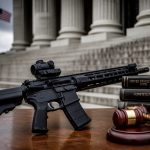
Acting Attorney General Todd Blanche and Assistant Attorney General Harmeet K. Dhillon announced that the United States filed two federal lawsuits against Governor Gavin Newsom’s California and Governor Abigail Spanberger’s Virginia. The California suit challenges the statute commonly called the “Glock ban” and parts of the state’s Handgun Roster that keep many modern handguns off the market. The Virginia suit attacks the new law that criminalizes commercial purchases of many AR‑15–style rifles. The DOJ says both laws run afoul of the Second Amendment and asks federal courts to declare them unconstitutional and to block enforcement.
Legal theory, key arguments, and national stakes
The DOJ’s complaints are built on the post‑Bruen legal framework: if a firearm is “in common use” for lawful purposes like self‑defense, the state must show a historical tradition of regulation that justifies a ban. The government argues that Glock handguns and AR‑style rifles are exactly the sort of common firearms the Supreme Court said deserve protection. The California filing also uses federal pattern‑or‑practice authority under 34 U.S.C. § 12601 to challenge the state’s enforcement approach. This isn’t minor paperwork — the cases squarely raise whether states can shut ordinary Americans out of buying the handguns and rifles they use for self‑defense.
Court fights ahead and the politics mixed into law
Expect fireworks. Private gun‑rights groups already sued both states, and state courts have been issuing injunctions in related cases. Now the federal government has jumped in, creating parallel litigation that will test jurisdictional lines and likely produce emergency motions for temporary restraining orders and preliminary injunctions. Don’t be surprised if California and Virginia dig in; Governor Newsom’s and Governor Spanberger’s teams, and their state attorneys general, are almost certainly preparing full defenses. These suits follow a string of DOJ challenges to local gun restrictions, so the department is clearly making Second Amendment enforcement a priority.
Why conservatives should be paying close attention
This is a welcome moment for anyone who believes constitutional rights matter more than political fashion. The Justice Department is not only defending individual gun owners — it is pushing back on the idea that state governments can quietly nullify a constitutional right by writing laws that chisel away at how people can buy common firearms. If courts allow blanket bans on weapons in common use, the slippery slope will be real. And if you prefer your rights enforced rather than debated away in state capitols, you should cheer a federal government that is actually using the courts to check overreach.
Bottom line
The DOJ’s twin lawsuits force a national conversation that too many state politicians wanted to postpone into obscurity. Courts will now sort whether California and Virginia crossed the constitutional line or whether states retain wide latitude to reshape the firearms market. Either outcome will ripple across the country and likely prompt more fights all the way to the appeals courts — and possibly the Supreme Court. For now, though, the federal government has put a marker down: the Second Amendment is on the docket, and Americans should watch how the judges answer.