Staff Reports
Iran’s rulers just did something nobody should want: they launched missiles over Israel and reminded the region how fast a local flare-up can turn global. Sirens wailed, air defenses fired, and ordinary people — not generals or diplomats — once again found themselves in the middle of a fight between regimes. If you live in the United States, don’t fool yourself: this isn’t “over there.” It affects gas prices, shipping lanes, military kids overseas, and the fragile peace that has kept a whole lot of Americans safe for decades.
What happened — and what we know so far
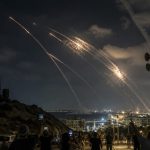
Early reports from Israeli officials say multiple missiles were launched from Iranian-held territory and flew over parts of Israel en route to other targets or intercept zones. Israel’s air-defense batteries responded, and cities went on high alert as people scrambled to shelters. Local news footage showed civilians in apartment stairwells, lights off in neighborhoods built for peace, not war.
Practical fallout for everyday Americans
When Tehran fires missiles, American families pay in ways that aren’t glamorous. Military families in the region face longer deployments or sudden relocations; U.S. ships and bases are put on heightened alert; and markets don’t like uncertainty — meaning higher costs at the pump for working people. Businesses that depend on stable shipping routes and insurers watching the Red Sea or Mediterranean will pass those costs down the chain.
Why Tehran did this — and why it matters
This wasn’t a spontaneous act. Tehran is signaling to rivals and to its proxies that it can reach across borders and raise the stakes. Whether it’s retaliation for strikes, a bid to shore up domestic credibility, or simply bad strategic calculus, the result is the same: more danger, more room for miscalculation. Those are the moments where a single mistake — a faulty intercept, an errant bomb, a misplaced order — can drag others into a broader war.
We’ve seen this script before: leaders in distant capitals make moves that ripple down to ordinary folks sitting in traffic, paying utility bills, or sending a kid off to boot camp. The hard truth is that restraint has to be chosen and enforced, not hoped for. Who will make that choice — and how much more risk are we willing to accept for the sake of someone else’s ambition?