Staff Reports
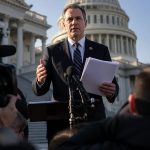
The White House quietly postponed a planned signing ceremony for President Donald Trump’s executive order on artificial intelligence and cybersecurity. The event had been billed as a big moment — CEOs from major AI firms were briefed and expected to attend — but the signing will not happen as planned. The president told reporters he “didn’t like certain aspects” and did not want to do anything that would block U.S. competitiveness against rivals like China.
Why the signing was delayed
At face value, the delay looks like plain common sense. President Trump said parts of the draft could become a “blocker” to American leadership in AI. That is a reasonable concern. The draft language tried to thread the needle between industry and national security, while a loud slice of the MAGA movement pushed for mandatory government approval of the most powerful models. That pressure, from groups organized under the banner “Humans First,” made the political math harder and may have nudged the White House to slow down and rethink the final text.
What was in the draft order
Reports say the draft would have set up a voluntary federal framework asking developers to give the government up to 90 days’ notice before releasing “covered” or frontier models. It also would have encouraged pre‑public access for critical infrastructure operators so banks and utilities could test risks. Those steps sound sensible for safety testing — but they were voluntary, not a full pre‑approval regime. The Commerce Department’s CAISI work on voluntary testing already builds on this idea, with big labs agreeing to do early checks and share data with the government.
The political and industry fallout
The postponement has immediate consequences. The White House loses a moment to showcase industry cooperation and presidential leadership. CEOs who were briefed now wait, and the delay spotlights internal debate instead of policy. It also gives critics on both sides room to complain: tech firms fear heavy-handed rules, while populist activists say a voluntary plan is not nearly enough. The choice is simple: either craft rules that protect national security without killing innovation, or produce a headline-grabbing order that pleases photo-op instincts and handicaps American companies.
A conservative way forward
Here’s the conservative view: applaud the pause, but don’t use it as an excuse for drift. National security comes first — we cannot let dangerous models be dumped on the public without review — but we also can’t handcuff U.S. firms while China charges ahead. The sensible path is targeted vetting for true frontier systems, formalize CAISI-style testing, and push Congress to legislate clear standards so the policy lasts beyond any single White House photo op. Delay for quality, yes. Delay out of confusion or cowardice, no. The country needs a plan that protects Americans, keeps our tech edge, and doesn’t leave policy to cable-TV demands or Silicon Valley spin.