Staff Reports
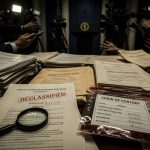
President Donald Trump used a primetime address this week to dump a stack of declassified documents onto the public table and call out what he says was a deliberate effort inside the intelligence world to hide China’s sweeping grabs of American voter data. The papers and internal emails now public show raw, ugly arguments inside the Intelligence Community and the FBI about whether to flag election-related intrusions. If you like conspiracies, this one is wearing its name tag: “deep state.”
Newly declassified records: what happened
The White House released memos, NIC assessments and internal FBI emails that show a push to recall an Albany‑origin Intelligence Information Report (IIR) alleging Chinese plans to produce fake driver’s licenses for mail‑in vote schemes. Senator Chuck Grassley has already circulated some of those emails. Other declassified NIC memos and analyst notes say China — and, in some documents, Iran — accessed or analyzed U.S. voter‑registration data. The administration points to those files and to the claim that Beijing ended up with more than 220 million U.S. voter records as proof that intel officials downplayed the risk ahead of the 2020 election.
What the documents show — and what they don’t
Make no mistake: the released records show real vulnerabilities and internal debate. Analysts warned centralized voter databases and poll books were exposed, and some field reports were pulled back or recast at headquarters. But the Intelligence Community’s 2021 joint assessment — the baseline public judgment — still says there were no indications that any foreign actor altered the technical conduct of voting or changed certified vote totals. Access to data and influence operations are bad and worthy of alarm; they are not the same as flipping vote counts. That distinction matters, even if some in the media and on the left want to blur it.
The “deep state” charge and why it matters
Here’s where the politics get unpleasant and honest: the emails and memos show officials fretting about how election‑linked intelligence would play in public and in Congress. One analyst warned the Presidential Daily Brief was being “massaged” to avoid election links. Others openly admitted disdain for President Trump and admitted to downplaying material because they didn’t like the politics. Call it bias, call it politics, call it institutional cowardice — whatever the label, the result is the same: beneath the patina of neutrality, people made judgment calls driven by politics, not only facts. If your answer to that is a shrug, ask yourself which side you’d trust with your vote security going forward.
What must happen next — demand answers and reforms
President Donald Trump and the White House deserve credit for forcing the files into daylight. Now the work begins. Congress and oversight officials must get full access to the documents with context — source reliability, analytic caveats, and the full record of who ordered recalls and why. FBI Director Kash Patel and Acting Director of National Intelligence Bill Pulte should lead a clear, transparent review and support inspector‑general probes. Americans can accept scrutiny of intelligence work — what we should not accept is selective secrecy that protects careers over national security. In short: show the receipts, explain the edits, and hold the people who suppressed or massaged the truth accountable. The country’s trust in elections depends on it, and trust is a lot harder to fix than a database.