Staff Reports
The latest flare-up in the US‑Iran war shows we are past the “phony peace” stage and into a real fight over the Strait of Hormuz. A Cyprus‑flagged container ship was hit, crew members were rescued and one Indian seafarer remains missing. Tehran says the strait is closed; Washington says it will keep it open — and has struck back.
What just happened in the Strait of Hormuz
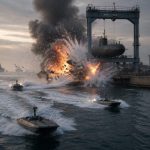
Iran’s Islamic Revolutionary Guard Corps says it fired on a ship that took an “unauthorized” route. The vessel, the M/V GFS Galaxy, was badly damaged and left disabled by fire and engine‑room damage. Ten of 11 Indian crew were rescued; one sailor is still missing. Iran then announced the strait was closed to shipping until U.S. actions stopped. That was the spark that set off a new round of strikes and sharp words.
U.S. military strikes and the president’s message
U.S. Central Command says American forces hit scores of Iranian military targets to degrade Tehran’s ability to attack civilian ships. Reports say roughly 140 targets were struck in the latest round and more than 300 targets over several nights. President Donald Trump publicly declared the ceasefire dead, said the United States would reinstate a blockade of Iranian ports, and bluntly posted: “The Hormuz Strait is OPEN, and will remain OPEN, with or without Iran.” That’s plain talk — and exactly the posture this crisis needs.
Why this matters to the world and to Americans
The Strait of Hormuz is a global choke point. A lot of the world’s oil and LNG flows through it, and any closure or threat raises oil prices, spikes insurance costs for shippers, and risks supply shocks. More importantly, civilians — merchant mariners — are being shot at. International law favors freedom of navigation, not an unilaterally policed “authorized route” set by Tehran. If we let Iran rewrite the rules by firing on container ships, the next step is chaos in global trade and fewer safe jobs for seafarers.
What Washington should do next
First, keep the pressure on Iran without pretending a weak memorandum of understanding will end the problem. Second, coordinate a real coalition: ask allies to step up with naval escorts, sanctions, and diplomatic isolation of Tehran. Third, protect merchant crews and demand accountability for attacks on civilian shipping. President Trump’s blunt posture is the right tonic for a dangerous game of brinkmanship; now Congress and partners must back it up with clear, legal plans for keeping Hormuz open and safe. No more phony peace. If diplomacy means letting gunboats set shipping lanes, then it isn’t diplomacy — it’s surrender.