Staff Reports
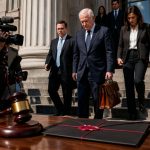
President Donald Trump walked off a taped “Meet the Press” interview after a sharp back-and-forth with NBC’s Kristen Welker. The clip made the rounds quickly — Trump called the network “crooked,” complained about one-sided coverage, and left the barn set in Wisconsin with his mic still in hand. The short scene tells a bigger story about the media, credibility, and how uncomfortable questions get handled when the answers don’t fit the narrative.
What happened on Meet the Press: the walkout and the barn
The interview was filmed inside a barn at President Trump’s request, with rain pattering on the metal roof — an atmosphere that made the scene feel theatrical, if not a little soggy. Welker pressed the president on his repeated claims that elections are “rigged” and asked for evidence. Trump insisted there was more proof than ever and accused Meet the Press and other networks of being one-sided. When Welker tried to pivot to questions about the Justice Department and Acting Attorney General Todd Blanche, Trump snapped, declared he’d “had enough,” and walked off camera. The exchange and the President’s quips — “Thank you, darling. Have a good time” and “I sat in the rain with you for an hour” — are now circulating across social feeds.
Why he walked out: more than a tantrum
Please don’t let the late-night comics decide what this moment means. Yes, it was dramatic. But the walkout was not just about temperament. Trump has built his presidency on two themes: fighting perceived media bias and insisting on election integrity. When a moderator publicly labels his claims as lacking evidence and keeps steering toward other topics, the President chose theatrical exit over what he sees as a closed loop of hostile questions. He framed the moment as a critique of the entire mainstream press — Meet the Press, ABC, CBS, CNN — calling them “crooked” because, in his view, they refuse to investigate the things he says matter.
Media spin versus a genuine dispute over facts
Mainstream outlets will rush to paint this as a refusal to answer tough questions. That’s their playbook. But squashing a man on his central grievance — that the public needs answers about election irregularities and about DOJ policy moves like the so-called “anti-weaponization” fund — won’t make the issue go away. If networks demand evidence, fine. But they should treat the questions and the evidence the same way they demand proofs from anyone they don’t like. Either the press is a neutral fact-finder, or it is an advocate. Trump’s walkout forces that very simple choice into the open.
Why conservatives should care
This clip matters because it shows the collision between a President who believes the system is stacked and a press corps that refuses to be questioned on its own biases. For conservatives who worry about impartial institutions, the exchange is a reminder: you can lament style, but you cannot ignore substance. The press will call him petulant. Supporters will call him right to refuse theater. Either way, the bigger debate about media fairness and election integrity is the thing that will outlast the viral moment. Call it an inconvenient barnyard truth — rain or shine.