Staff Reports
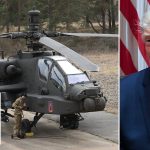
President Donald Trump told reporters at the White House that the United States would respond again if Iran did not accept terms to end the fighting. His blunt line — “We hit them hard yesterday, and we’re going to hit them again hard today” — came after a U.S. Apache helicopter was downed near the Strait of Hormuz. The result: CENTCOM announced self‑defense strikes, Iran claimed retaliatory missile and drone attacks, and fragile diplomacy was thrown back into the blender.
Trump’s warning and the military response
President Donald Trump tied the strikes to stalled negotiations, saying the U.S. will press the fight until Iran agrees to a deal. U.S. Central Command (CENTCOM) confirmed that American forces “began launching self‑defense strikes” after the Apache helicopter was shot down while operating in the Strait of Hormuz. CENTCOM called the actions a “proportional response to unjustified Iranian aggression.” That’s a clear chain of cause and effect — a pilot in harm’s way, an immediate U.S. response, and a president publicly owning the decision.
Iran’s counterclaims and the strike picture
Tehran’s Islamic Revolutionary Guard Corps and state media said Iran launched missiles and drones at U.S. targets in the region, naming bases in Jordan, Kuwait and Bahrain. Regional militaries reported many incoming projectiles were intercepted and that most missed their targets. As always in war reporting, both sides make hard claims; CENTCOM has so far emphasized intercepts and limited confirmed damage. The proximate trigger — the downing of the Apache — remains the clearest fact in an otherwise noisy battlefield of claims and counterclaims.
Diplomacy under fire
Mediators in Qatar and Pakistan had been shuttling proposals to try to cut a deal and stop the back‑and‑forth attacks. The new round of strikes makes that delicate track harder to sustain. If diplomacy was the only highway out, it’s now clogged with wreckage. That does not mean force and diplomacy are mutually exclusive, but it does mean the U.S. needs a coherent plan that keeps talks alive while protecting American forces and interests.
Why Americans should pay attention
This isn’t a soap opera in the desert; it’s a test of leadership and strategy. The president is right to back the troops and to make clear deterrence matters. But rhetoric alone won’t win a lasting peace. America needs clear objectives, honest reporting on damage assessments, and oversight to avoid open‑ended commitments. If officials are going to threaten infrastructure or civilian targets — as some comments this spring hinted — that raises serious legal and moral questions and risks alienating neutral partners who might otherwise help the diplomatic track.
Bottom line
President Donald Trump and CENTCOM responded decisively after an American helicopter was downed. Iran answered with its own strikes, most of which appear to have been intercepted. Now the hard work begins: verify the damage, protect troops, and salvage a diplomatic path. Conservatives should demand strength, clarity and accountability — not chest‑thumping for its own sake. The goal is to end the violence on terms that keep Americans safe and restore real stability, not to win applause for dramatic sound bites.