Staff Reports
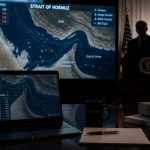
The big news this week was clear: high‑level U.S.–Iran negotiations opened in Switzerland while Iran’s Islamic Revolutionary Guard Corps (IRGC) loudly announced the Strait of Hormuz was “closed.” Vice President J.D. Vance led the U.S. team as diplomats tried to lock down a Lebanon ceasefire and keep oil shipping lanes open. That same hour, Iranian commanders barked threats. The result: talk and terror at the same time — and the world is supposed to treat both as equally credible.
What happened in Switzerland
U.S. negotiators flew to Switzerland to build on an interim deal. Vice President J.D. Vance said the meetings “set a good foundation” for moving from a pause to a longer ceasefire in southern Lebanon. The talks also aimed to create mechanisms to keep the Strait of Hormuz open and address Iran’s frozen assets and sanctions. Iran’s delegation included heavy hitters like Parliament Speaker Mohammad Baqer Qalibaf and Foreign Minister Abbas Araghchi. The message from the U.S. was that diplomacy matters — provided it is backed by real leverage.
Iran’s warning: real blockade or hot air?
The IRGC declared the Strait of Hormuz closed and told ships to stay away. That sounds dramatic, but U.S. military officials and maritime tracking showed ships still moving. In plain words: Iran used the threat as a bargaining chip. This is the same playbook — bluster the world, try to scare markets, then bargain for sanctions relief. It’s blackmail dressed up as “national security.” We should treat the IRGC’s statements as theater until there is independent proof of a real, enforced closure.
Why this matters and what should change
The Strait of Hormuz is not a political prop. A real closure would spike energy prices, hurt allies, and hand Iran an outsized lever over the global economy. That’s why the U.S. must keep ships moving, back Israel’s security needs, and keep pressure on Iran while negotiating. Diplomacy is useful, but it must be firm. Praise for talks is fine; praising threats is not. If talks in Switzerland are to matter, negotiators need clear verification steps and contingency plans that don’t rely on trusting verbal promises from a regime that uses coercion as policy.
Call this what it is: a fragile peace backed by muscle and skepticism. Let the diplomats talk in Switzerland, but don’t let the IRGC sell the world a scare. Keep the Strait of Hormuz open, keep sanctions as leverage, and insist on verifiable actions before lifting penalties. The rest is drama — and when Tehran stages a show, the rest of us should demand receipts.