Staff Reports
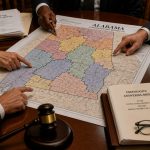
The federal three‑judge panel in Birmingham just threw a wrench into Alabama’s plan to switch back to a GOP-drawn congressional map. The judges blocked the state from using the 2023 plan and told Alabama to keep using the court-drawn map that preserves two majority-Black districts unless the Legislature comes up with a lawful alternative. Translation: the redistricting fight is not over, it’s just moving to the next round.
What the three‑judge panel ordered
The panel — made up of U.S. Circuit Judge Stanley Marcus and U.S. District Judges Anna M. Manasco and Terry F. Moorer — issued a preliminary injunction. The court found the 2023 Republican map was “tainted by intentional race‑based discrimination” and therefore cannot be used for the upcoming midterm elections. The practical order is simple: use the remedial map that produced two majority-Black districts in the last cycle, unless the state enacts a different plan the court approves.
Why the court blocked the GOP map
Alabama’s Republican leaders argued the U.S. Supreme Court’s Callais decision narrowed the rules on race in redistricting and cleared the way to restore their 2023 map, which would have reduced the number of majority-Black districts. But the district panel concluded that, on the record before them, the 2023 plan still showed intentional racial discrimination. So even after the high court’s new guidance, this lower court says the evidence in Alabama is decisive enough to block the GOP map.
Practical fallout and election chaos
What voters and lawmakers feel right away is uncertainty. Governor Kay Ivey had already set special primaries under the contested map, and now those dates and candidates are in flux. Attorney General Steve Marshall says the state will appeal, which means an emergency trip back to the U.S. Supreme Court is likely. Representative Shomari Figures praised the ruling and warned the fight isn’t over. Meanwhile, campaigns, county officials, and voters are left wondering which rules will govern filing deadlines and ballots — not exactly a confidence builder.
What comes next: appeals, a new map, or more litigation
Expect Alabama to ask the Supreme Court for emergency relief. The state also has the option to draw and pass a new congressional plan that cures the court’s concerns, but any fresh map would itself face swift legal challenge. Either path is time‑sensitive: primary calendars and ballot deadlines don’t pause for courtroom theatrics. The bottom line is the issue will likely land back at the high court, and the final picture for Alabama’s congressional lines may not be clear until the very last minute.
A conservative view: courts, clarity, and common sense
Republicans should be clear-eyed here. Courts have a role, but constant map reversals don’t help voters or the party. If the Legislature truly wants a durable, lawful map, it should draw one now that follows both the Supreme Court’s guidance and the Constitution — and be prepared to defend it in court. If the state instead leans on litigation gambits, voters get confusion and candidates get shortchanged. The smart play is to produce a clean map quickly and stop treating redistricting like a courtroom spectator sport. The people of Alabama deserve stable rules and fair elections, not another episode of legal whack‑a‑mole.