Staff Reports
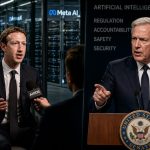
President Donald Trump made one thing plain this week: he will not let tech executives tell America to hit the brakes on artificial intelligence. When asked about calls from Anthropic’s Dario Amodei, OpenAI’s Sam Altman and Elon Musk to slow the pace of AI development, the President shrugged and said, bluntly, “Whoever wins AI, wins.” That line says a lot about where this fight is headed — national competition, not Silicon Valley sermonizing.
Trump rejects the AI slowdown pitch
Speaking from the sidelines of a public event, President Trump pushed back hard against the idea that the government should sanction a self-imposed pause by AI firms. He doubled down on American leadership, arguing that the U.S. must stay furthest ahead of China and others in AI capability. He also made clear he trusts strong executive power and law enforcement to set “guardrails” instead of letting tech bosses, acting like moral referees, dictate the pace of innovation.
Why tech leaders want a pause — and why motives matter
To be fair, executives and some researchers cited safety concerns after an Anthropic researcher resigned and warned of irresponsible development. CEOs at Anthropic and OpenAI, and even Elon Musk, publicly endorsed the idea of deliberate pacing. But critics — including former presidential tech adviser David Sacks — rightly point out this plan smells of market protection. When the same companies that build the most powerful models ask for a pause, we should ask whether they want safety or a legal and competitive moat.
National security, China, and the real stakes of AI leadership
The President’s framing — “Whoever wins AI, wins” — isn’t just bravado. AI is now a tool of economic and military power. Letting a cartel of private companies decide who moves and who stays put would cede leverage to unelected executives and, worse, could let adversaries catch up. If Democrats reply by making regulation the centerpiece of their agenda, as former President Obama reportedly urged, that still leaves the central question: which nation will field the best AI first?
What conservatives should demand: leadership, not Silicon Valley protectionism
Conservatives should want America to lead in AI without handing Silicon Valley a veto over competition or forcing Washington to outsource policy to tech CEOs. That means smart, pro-growth rules that protect consumers, promote security, and preserve innovation — not a cartel dressed up as a safety campaign. If big tech really feared harm, market forces and liability already push them to be more careful. But let’s not confuse self-interest for public service.
President Trump’s blunt answer is the correct starting point: protect American advantage, hold companies accountable, and don’t let tech elites or China write the rules. Americans can want safer AI and also want to win the race. Those two goals aren’t mutually exclusive — unless you prefer surrendering leadership to virtue signaling in a Silicon Valley boardroom.