Staff Reports
President Donald Trump again turned a moment of military action into a Twitter-style dare. In a Truth Social post, he suggested renaming the Strait of Hormuz the “TRUMP STRAIT” now that, he said, the United States has it under control. The comment came after U.S. strikes on Iranian targets near the waterway and public claims that shipping through the strait is returning to normal.
What the president actually said
President Donald Trump wrote that since the United States “has it under U.S.A. control,” why not call the Strait of Hormuz “TRUMP STRAIT.” It was delivered with the usual mix of chest-thumping and showmanship. This administration has already used naming moves as a political cudgel — from renaming federal maps for the Gulf of Mexico to ordering a relabeling of Lake Ontario on U.S. materials — so this follows a familiar playbook: make a bold, headline-grabbing proclamation and let the world react.
Military action and the claim of control
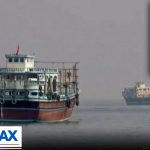
The president’s post followed a fresh wave of U.S. strikes that CENTCOM said targeted Iranian military facilities tied to attacks on shipping and U.S. personnel. Energy Secretary Chris Wright has pointed to shipping numbers — more than 17 million barrels moving through the strait on a recent day, the administration says — as evidence that U.S. pressure is restoring transit. In short: our forces struck, ships started moving again, and the administration is treating the moment as proof of leverage.
Legal limits and the international reality
Names on a map are not borders
Here’s the hard part for headline writers: a president can order how U.S. federal maps label features. The U.S. Board on Geographic Names will follow Washington’s lead for domestic use. But changing what the rest of the world calls a sea lane is another matter. The Strait of Hormuz sits between Iran and Oman and is not U.S. territory. No presidential post or federal memo can legally convert that waterway into internationally recognized U.S. soil. Other countries, international bodies, and mapmakers will not be forced to adopt a unilateral U.S. renaming. In short, “Trump Strait” would be largely rhetorical unless it somehow won global acceptance.
Why this matters — and what should be done
This stunt is two things at once: a domestic rallying cry that plays well to the base, and a risky diplomatic provocation. Words and names matter in foreign affairs. Taunting allies, antagonizing neighbors, or treating shared waterways like trophies can raise tensions and complicate the real work of securing shipping lanes and energy markets. If the administration wants stable oil transit and safer seas, it should double down on real-world measures — patrols, alliances, diplomacy, and clear rules of engagement — rather than victory laps on a map. Call it a branding exercise if you like, but don’t confuse a clever caption with the hard work of keeping a choke point open and the world calm.