Staff Reports
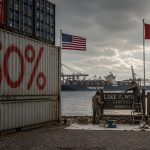
President Trump signed an executive order in the Oval Office, announced with characteristic bluntness: Lake Ontario will now be called “Lake America” in U.S. federal usage. He framed it as a patriotic correction and a jab at Canada — part policy, part theatrical slingshot in an escalating trade fight. The move looks bold on camera; in practice it’s a federal label with a big diplomatic sting attached.
What the order actually does
The executive order directs the Department of the Interior and the U.S. Board on Geographic Names to change federal databases, maps and agency materials so that the body of water now ordinarily called Lake Ontario will be recorded as “Lake America” within 30 days. That’s the administrative reality: federal usage only. It doesn’t — and can’t — make Canada stop calling it Lake Ontario on its maps, navigation charts, provincial documents or international papers.
Why the White House pulled this lever
This isn’t just about geography. The renaming comes in the middle of a punitive trade spat: Washington slapped tariffs on roughly $20 billion of Canadian goods, including headline 50% duties on large lists of items, and Ottawa answered with retaliatory duties on hundreds of U.S. products. President Trump used the Oval Office moment to paint Canada as a free-rider on trade and defense, and Ottawa’s response — led publicly by Prime Minister Mark Carney — was a pointed, dollar-for-dollar counterpunch and a warning that Canada won’t be treated like a subsidiary.
Real consequences on the ground
For people who drive across the Peace Bridge, load boxcars in Buffalo, or ship grain out of the Great Lakes ports, this isn’t symbolism — it’s potential cost. Tariffs don’t stay in the customs office; they get passed along to manufacturers, farmers and consumers. Small factories in the Midwest that rely on Canadian parts, truckers who shuttle export goods, and families buying everyday groceries can feel the bite long before any map on a federal website updates.
The bigger picture and the hard question
There’s a pattern here: use every bit of the federal toolbox — naming databases, tariffs, public theater — to apply pressure and score political points. That’s politics, and sometimes that’s diplomacy too, but there’s a limit where theater becomes a bill at the grocery store or a lost shift at the plant. So here’s the question voters should keep asking: do you want bold posturing that changes a federal label, or policies that actually protect jobs and pocketbooks when the consequences arrive at your door?