Staff Reports
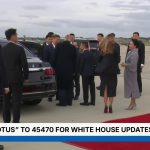
President Trump’s walk through Beijing’s red carpet didn’t come with the usual cable pundit fury — just a parade of tight smiles and careful readouts. On Jesse Watters’ primetime show the message was simple: don’t mistake Trump’s graciousness for weakness. The audience was told to read the optics as a chess move, not a surrender flag.
Watters’ pitch: strength, not softness
On Jesse Watters Primetime, Watters ran a full-court press framing the Beijing summit as a test of personal strength and dealmaking. He warned viewers that President Trump’s polite tone was tactical — a bargaining posture, not a sign of deference — and brought on guests like Peter Schweizer to underline the point, with Schweizer saying China “know[s] Trump will not tolerate” disrespect. That’s opinion TV, plainly labeled as such, and it’s aimed at a base tired of theatrical apologies and lecture-driven diplomacy.
What the summit actually delivered
The readouts were less cinematic and more transactional: the White House announced China would increase purchases of U.S. agricultural goods — roughly $17 billion annually for 2026–2028 — and promised steps to restore market access for some U.S. beef and poultry. Reporters also flagged the diplomatic flashpoints left untouched: Xi publicly warned about Taiwan, while Washington emphasized trade, fentanyl interdiction and keeping the Strait of Hormuz open. So yes, there were tangible commercial moves, but no sweeping settlement on long-term tech controls, Taiwan’s status, or the broader security competition.
The real-world stakes for Americans
Let’s be concrete. A pledge of $17 billion in agricultural purchases matters to a Midwestern farmer balancing input costs and mortgage payments; market access for beef and poultry could mean reopened processing deals and jobs in small towns. But the same trip leaves families worried about fentanyl flows and technicians who worry about whether chip supply-chains will stay American-friendly. Diplomacy that’s all optics can hand you a photo op and a short-term soybean bump, while leaving the real threats — decoupling in critical tech, a hardening stance on Taiwan, illicit drug networks — to fester.
There’s nothing wrong with seeing a handshake and calling it a handshake. There’s everything wrong with treating a summit as the sum total of strategy. If President Trump’s charm offensive is a negotiating tool, prove it by delivering durable results that protect American jobs, borders and security — not just headlines. Which is it going to be: theater that flatters the moment or strategy that outlives the applause?