Staff Reports
They came to the National Mall to pray, sing, and celebrate 250 years of American life — and found themselves in the middle of a political ambush. What played out was more than a noisy demonstration; it was a deliberate attempt by activist groups to “counter‑message” the White House‑backed Freedom 250 / Rededicate 250 events and, as independent journalist Nick Sortor told viewers on national television, to undercut the patriotic framing that many Americans came to honor. The clash looks small when you see a snapshot, but it tells you everything about how Americans are being taught to fight over the story of the country itself.
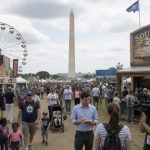
Clash on the Mall: prayer vs. protest
The Rededicate 250 gathering was promoted by the White House’s Freedom 250 effort as a centerpiece of the anniversary — a faith‑focused ceremony that drew pastors, families and elected officials, including House Speaker Mike Johnson, to the National Mall. Nearby, organized groups staged counter‑actions: projection campaigns, alternative programming, and signs that explicitly rejected what they called a theocratic or exclusionary version of patriotism. That’s not just politics; it’s a public square being wrestled over in real time.
For the people who drove in, set up folding chairs and brought kids to see a patriotic service, the spectacle was jarring. Instead of a quiet civic moment, they were greeted by activists projecting “Democracy NOT Theocracy” onto public buildings and chanting outside the perimeter. The result: a family outing turned into a charged political event, with security, volunteers and ordinary Americans caught in the crossfire.
The media and the messaging war
Networks and pundits immediately parsed the footage through political lenses. Conservative outlets highlighted the crowd sizes and the prayerful tone of Freedom 250; other outlets flagged the counter‑protest as a necessary pushback against a narrowly religious national narrative. Into that swirl stepped Nick Sortor, the independent on‑the‑ground reporter Fox circulated clips of — the sort of guy who says he embeds with protesters, records organizers, and once joked about “putting a load of conditioner” in his hair to blend in; whether you find that amusing or eyebrow‑raising, his footage and takeaways are shaping how millions understand what happened on the Mall.
Why this matters to working Americans
This isn’t theater for the coastal chattering class; it’s a signpost of how our civic life is changing. When public celebrations of history turn into arenas for ideological one‑upmanship, ordinary folks pay the price — their sense of shared identity frays, civic rituals become politicized, and the national narrative gets parcelled out to the loudest faction. If the debate over America’s 250th ends up decided by who can shout the loudest on the Mall, then we’ve lost more than a holiday; we’ve surrendered the idea that Americans of different stripes can still find a reason to gather together.
So here’s the hard question nobody in a studio seems keen to admit: are we going to let every patriotic moment be interrupted and redefined by activists who want to make it a battleground, or will Americans insist on space to celebrate their country without being told their patriotism is propaganda?