Staff Reports
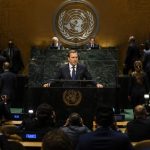
President Luiz Inácio Lula da Silva used the prized first slot at the U.N. General Assembly this week to fire a broadside at U.S. power, defend U.N. human-rights actors, and stake his campaign claims of Brazilian sovereignty. His speech mixed grand global themes with clear domestic politics: Brazil’s trade fight at the World Trade Organization, pointed lines about “aircraft carriers” in the region, and blunt language on Gaza. It was as much a campaign speech as a diplomatic address — and it landed with predictable thunder in Washington and at home.
What Lula Said at the U.N.
Standing on the U.N. podium, President Luiz Inácio Lula da Silva told the world, “Brazil doesn’t fit in anyone’s backyard.” He warned against tariffs used as “weapons of coercion” and criticized what he called a weakening of multilateral institutions. Lula also accused Israeli actions in Gaza of causing generational trauma for Palestinians and defended U.N. Special Rapporteur Francesca Albanese from diplomatic attacks. He aimed punches at U.S. policy without naming President Donald Trump, while reminding listeners that Brazil will choose its next path in an election that he says is a choice between “democracy and denialism.”
Why This Matters: Trade, Elections and Tension
The speech is not just rhetoric. Brazil has already asked the World Trade Organization for consultations over new U.S. duties — the formal first step in a WTO dispute process. By airing the tariff fight at the U.N., Lula turned a trade quarrel into an international political issue and folded it into his reelection pitch. That’s smart campaigning but risky diplomacy: this public push risks prolonging a WTO battle, inviting tit-for-tat measures, and keeping exporters and investors on edge.
WTO Fight and the 60‑Day Clock
Under WTO rules, consultations start a 60‑day window. If Brazil and the United States can’t reach agreement, Brazil can ask for a dispute panel. That procedural fact matters because the WTO timeline can drag on for months or years, and opponents will use the dispute as campaign fodder. Lula made a show of sovereignty on the world stage — and set a calendar for a formal trade clash that the U.S. won’t ignore.
The Gaza Lines and Political Theater
Lula’s harsh words on Gaza and his defense of U.N. human-rights figures played well to global audiences that favor strong human-rights rhetoric. But they also expose a double standard. On one hand he demands scrutiny of Israel; on the other he has shown far less interest in demanding free elections in Cuba while accusing the U.S. of punishing Cubans. That selective outrage is the sort of moral balancing act voters see for what it is: foreign-policy theater that doubles as campaign messaging.
Bottom Line: Campaigning on the World Stage
President Luiz Inácio Lula da Silva used the U.N. to score domestic points and to escalate a real, procedural trade fight at the WTO. The spectacle serves his campaign by casting him as a defender of Brazilian sovereignty and a leader willing to take on great powers. But there’s a catch: turning bilateral disputes and human-rights debates into election ammunition raises the odds of diplomatic blowback and economic uncertainty. Voters deserve to know whether this is principled leadership or a calculated speech designed to win votes on the world’s biggest stage — and Washington should treat the WTO filing and U.N. rebukes as the serious diplomatic signals they are.