Staff Reports
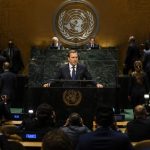
President Trump climbed the United Nations podium this week and didn’t bother with long lectures or euphemisms. He told the world — and Tehran directly — that he’s “in deciding mode,” laying out blunt options: heavy military pressure, tighter economic isolation, or a negotiated deal if Iran proves willing. The remarks set off the familiar debate: strength or diplomacy, saber-rattling or sandbox talks — and the cable panels followed right behind.
Trump’s “decision mode” — what that really means
“Decision mode” isn’t a catchphrase; it’s a posture. President Trump made clear the U.S. is weighing tools across the spectrum — from stepped-up naval and military pressure around the Strait of Hormuz to deeper sanctions and targeted economic isolation, with negotiation left on the table if Tehran shows seriousness. That mix matters because it signals Washington is willing to raise the cost on Iran, not just talk about it at cocktail parties in New York.
Fox’s panel: calling out a malevolent regime
On The Five, panelists — including retired NYPD inspector and Fox contributor Paul Mauro — didn’t sugarcoat the threat. They framed Iran’s leadership as a malevolent force that exports terror and instability from Beirut to Baghdad and beyond, arguing that strength and clear consequences are the only way to protect American interests. Masoud Pezeshkian’s Iranian delegation was in New York this week, so the rhetoric wasn’t just theater; it was diplomatic posturing in real time.
Real consequences for everyday Americans
This isn’t abstract. When tensions spike in the Middle East, Americans feel it at the gas pump, in higher shipping costs for goods, and in the lives of servicemembers patrolling dangerous waters. Families of sailors in the Fifth Fleet, truckers watching fuel prices, and small businesses on tight margins all pay the bill for vague “geopolitical uncertainty.” And let’s be honest: the question of whether the U.S. sends more troops, imposes crushing new sanctions, or finds a diplomatic path will shape election-year politics and budgets for years to come.
We can argue about tactics — negotiating from weakness or negotiating from strength — but the practical choice is the same: either the world learns that American warnings mean something, or adversaries learn they don’t. Which lesson do you want Washington to teach?