Staff Reports
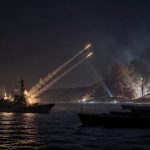
The Pentagon says the strikes are back on. U.S. Central Command announced that “U.S. forces began striking Islamic Revolutionary Guard Corps (IRGC) targets in Iran” after what Washington calls attempts to lay mines in the Strait of Hormuz and attacks on American service members. This is not a news flash from a TV drama — it’s a clear, deliberate resumption of military pressure to stop Iran’s dangerous games in a vital shipping lane.
What actually happened
The strike announcement follows a weekend operation the U.S. carried out against Iranian rocket launchers on Larak Island, which U.S. officials said were being used to prepare rockets and mines for the Strait of Hormuz. CENTCOM says the new strikes began at noon ET and were a response to IRGC attempts against commercial shipping and U.S. personnel. Iran’s state outlets claim damage and casualties and vowed retaliation; some missiles and a drone were reportedly intercepted by Jordan and the UAE. CENTCOM pushed back on Iranian claims that ships hit mines and called such reports false — which matters when facts are in short supply.
Why the Strait of Hormuz matters — and why this is not just another headline
The Strait of Hormuz is a global chokepoint. A huge share of the world’s oil passes through that waterway. When Iranian forces threaten to lay mines or attack commercial ships, markets and families who fill up their gas tanks feel it immediately. Oil prices jumped as traders priced in supply risk. The U.S. strikes are billed as narrow, defensive moves to protect shipping and American troops. If you care about reliable energy and safe commerce, you should want the U.S. to stop minelaying and harassment before a freighter becomes a tragedy and a shipping lane becomes a graveyard.
What to watch next
There are still big questions. Iranian casualty claims and damage reports are hard to verify independently inside Iran. CENTCOM so far has not listed every target in public detail. Watch for follow-up CENTCOM and Department of Defense updates, official statements from Jordan and the UAE about interceptions, and shipping data showing whether vessels resume normal transits. Markets will keep reacting to any new flare-up. And yes, listen for what President Donald Trump and his administration say next — the White House rhetoric will shape how Iran calculates further steps.
This is a test of American resolve. We can play diplomatic theater, or we can protect global commerce and our forces with clear action. The recent strikes show the U.S. chose the latter. Iran has repeatedly raised the stakes with reckless moves in a narrow waterway that affects the world. If restraint means allowing mines and attacks on ships, then restraint needs a new definition. For now, the U.S. is making a hard choice: defend the lane, protect Americans, and force Tehran to pay for dangerous brinkmanship — preferably before more lives or free-market stability are put on the line.